


The Paradigm Shift: From Symptom Management to Healthspan Preservation
What does a 35-year-old experiencing spontaneous premature ovarian insufficiency (POI) have in common with a 50-year-old navigating natural menopause?
For both women, the loss of ovarian function represents far more than the end of fertility - it marks the beginning of a chronic endocrine shift that accelerates biological aging and alters systemic health outcomes. Yet, our most efficacious intervention (hormone therapy) is often delayed until symptoms become unbearable, artificially restricted by the outdated dogma of "the lowest dose for the shortest time."
But what if we shifted our lens? This month, we are breaking down two landmark papers that challenge the status quo, urging us to view modern hormone therapy not just as a tool for symptom relief, but as a preventative strategy for healthy aging and systemic economic health.
✔️ A New Standard for POI & Early Menopause: The new FIGO and IMS joint position statement reframes POI and Early Menopause as chronic endocrine conditions driving accelerated aging. The guidelines explicitly recommend doubling standard postmenopausal menopause hormone therapy (MHT) doses to restore physiological premenopausal estrogen levels, and push back against arbitrary age-based stopping rules (Benedetto et al., 2026).
✔️ The Economics of MHT: A landmark US health economics analysis (the first since 2009) proves that modern, transdermal MHT is economically dominant. For every 10,000 patients treated, early MHT initiation saves the healthcare system up to 135 million over a lifetime. Scaled nationally, this represents over 216 billion in systemic cost savings driven by long-term disease avoidance (Gill et al., 2026).
A new joint statement outlines critical updates for POI & EM management:
The International Federation of Gynecology and Obstetrics (FIGO) and the International Menopause Society (IMS) are calling for a shift in how we think about and manage POI and Early Menopause (EM). Historically viewed through a reproductive lens, POI and EM are chronic endocrine conditions driving accelerated biologic aging. Prolonged, untreated estrogen deficiency exposes these women to epigenetic aging, telomere shortening, excess cardiovascular mortality, and early-onset frailty.
Figure 1: A clinician reviewing the new position statement, which calls for updated approaches to hormone therapy in POI and early menopause.
To bridge the gaps in delayed diagnoses and fragmented treatment, the joint statement outlines several critical updates for clinical practice:
Broadening the Etiological Radar to catch POI/EM earlier.
Genetic & Familial: Most POI cases are idiopathic. A first-degree relative with POI carries an 18-fold increased risk. Turner syndrome is the most common chromosomal cause, but Fragile X (FMR1) and metabolic conditions like galactosemia should be considered.
Immune Dysregulation: Autoimmunity is a contributor in some women with autoimmune disorders. The statement refers to a recent small case-control study that found that elevated inflammatory cytokines (IFN-γ and IL-22) correlated with increased FSH and decreased AMH.
Iatrogenic: Chemotherapy, radiation, and pelvic surgery directly damage the follicular pool. Notably, “spontaneous” POI may differ biologically from iatrogenic forms, likely driven heavily by accelerated vascular aging.
Under-Recognized Risk Factors: Be alert to early-life and lifestyle modifiers: extreme low BMI (<18.5), chemical/endocrine disruptors, preterm birth, in utero smoke exposure, early menarche (<11 years), short cycles (<25 days), and infections (mumps, TB, HIV).
A Streamlined & Expanded Diagnostic Workup: To reduce diagnostic delays, the criteria have been simplified: a single elevated FSH (>25 mIU/mL) in women under 40 with irregular menses/amenorrhea for at least 4 months is now sufficient. Repeat testing is only necessary if there is diagnostic uncertainty.
Autoimmune Screening: Autoimmune oophoritis affects some women with autoimmune disorders. Testing for 21-hydroxylase antibodies remains the most specific marker recommended for spontaneous POI screening.
Expanded Genetics: Standard karyotype and FMR1 tests miss the majority of genetic drivers. If baseline tests are negative but family history is strong, the guidelines urge utilizing Next-Generation Sequencing (NGS) and Whole-Exome Sequencing (WES).
Prescribing Approaches: "Double the Dose" to Reach Physiological Thresholds.
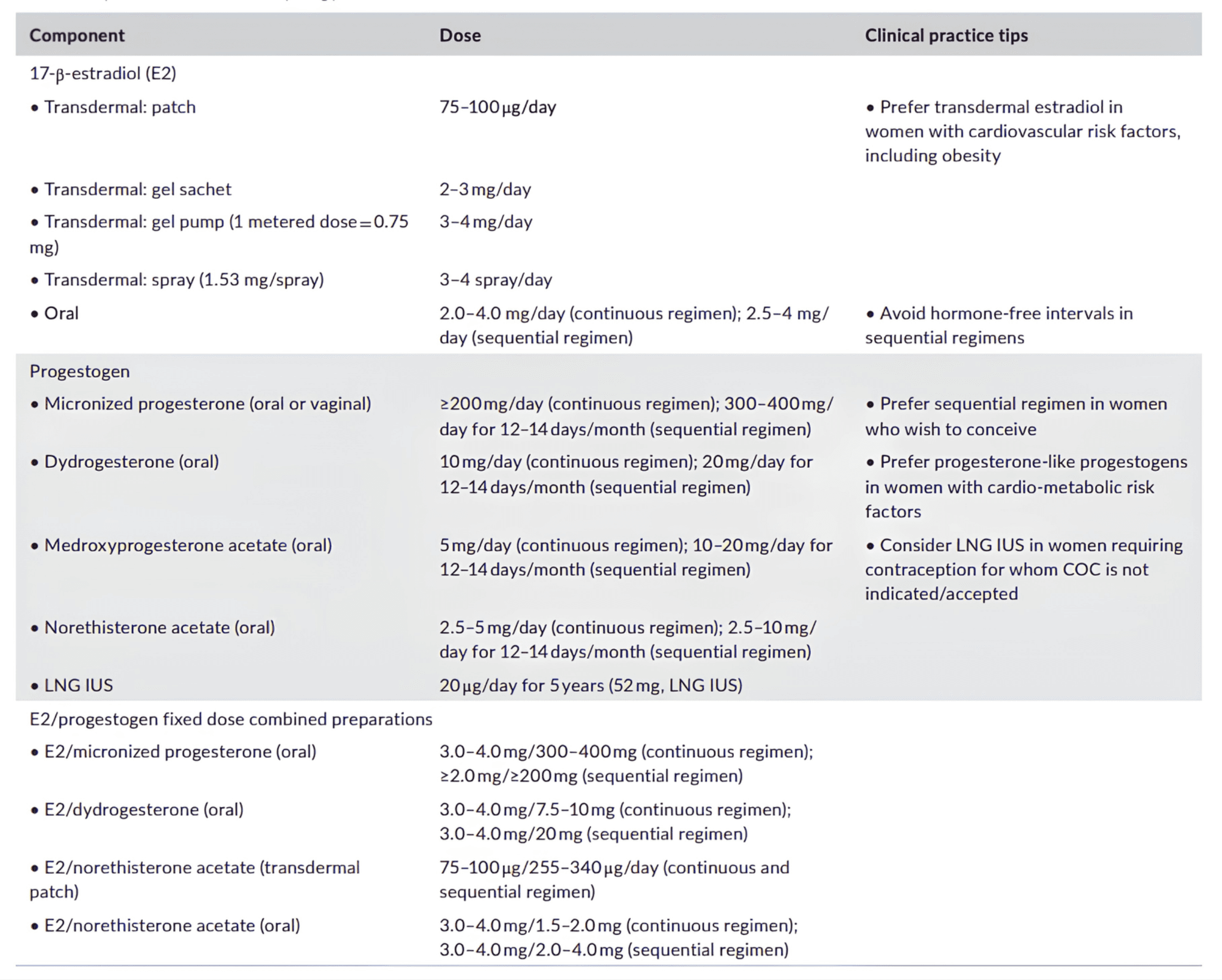
The goal is full physiological premenopausal replacement - restoring serum estradiol to 50–100 pg/mL.
The Regimen: This requires double the standard postmenopausal hormone therapy (HT) dose with proportional increases in progestogen for endometrial protection.
The Evidence: 100 mcg/day transdermal E2 restores lumbar spine and femoral neck bone mineral density (BMD) to normal levels. In women with Turner’s Syndrome specifically, high-dose E2 also shows dose-dependent benefits in carotid intima thickness (a cardiovascular surrogate marker), but remains unproven for other POI etiologies. Importantly, physiological dosing in POI does not increase breast cancer risk compared to age-matched, normally menstruating peers.
Table 1: Summary of the suggested HT regimens and doses in women with POI/EM. Directly sourced from the guideline.
Formulation Nuance: HT vs. Cyclic COCs.
For patients requiring contraception, Combined Oral Contraceptives (COCs) are the default - but formulation is critical.
The 12-Week Gap: Standard cyclic COCs (7 inactive days) result in up to 12 weeks of estrogen deprivation per year. The 7 inactive days is thought to explain inferior lumbar BMD outcomes compared to continuous estradiol-based HT in randomized controlled trial.
The Fix: Prescribe COCs continuously. Retrospective data show that standard 30 mcg ethinyl estradiol COCs achieve BMD outcomes comparable to high-dose continuous HT regimens (and superior to lower-dose HT). Importantly, direct evidence evaluating continuous COCs or “bioidentical” estrogen (e.g., estrogen esters) contraceptives remains limited.
Cardiovascular & Metabolic Impact: To date, no studies have compared HT and COCs on major cardiovascular (CV) outcomes (though the upcoming POISE trial evaluating HT vs. COCs for both BMD and CV disease will soon change this). However, a small open-label crossover RCT (n=34) showed that a specific transdermal regimen (100 mcg/day for 1 week, followed by 150 mcg/day for 3 weeks) resulted in significantly lower 24-hour systolic/diastolic blood pressure, serum creatinine, and renin-angiotensin activation compared to standard 21-day 30 mcg EE COCs.
Navigating Age 50+ and Contraindications: Older guidelines typically recommended HT until the natural age of menopause (~50–52). While the direct long-term data on extending HT beyond this age in POI/EM is lacking, the latest research strongly supports continuing therapy for skeletal, CV, and neurocognitive preservation.
Don't Stop Abruptly: Review annually at natural menopause age. Down-titrate from POI doses to standard/low-dose HT (e.g., 12.5–25 mcg patch), which can be maintained well beyond age 60 in the absence of contraindications.
High-Risk Patients: For those with clear contraindications like active hormone-sensitive malignancies, treat with local vaginal therapy for GSM and non-hormonal tools: intensify lipid-lowering therapies, optimize calcium/Vit D and weight-bearing exercise (long-term safety data for bisphosphonates in young POI is lacking), and utilize NK3R antagonists for VMS.
Key Clinical Takeaways
Consider broad epidemiological and familial risk factors to support earlier recognition. First, whe goal is full physiological replacement - meaning doubling the standard HT dose. Second, when prescribing for a patient who desires contraception, continuous regimens are more beneficial to offset adverse bone density effects. Finally, maintain the high-dose regimen until the natural age of menopause (~50-52) and then continue HT at a down-titrated dose.
You can find the whole guideline directly in the clinical guideline library inside our latest tool, Dama Assist, and ask Dama Assist questions, find more details, and go deeper about the recommendations. Access your complimentary 14-day free trial here.
Why Modern MHT is High-Value Care
We often discuss precision hormone prescribing through the lens of individual patient quality of life. But what is the economic impact of prescribing the "right type" of hormone therapy?
A recently published paper modeled the financial and clinical impact of prescribing the modern gold standard - transdermal, bioidentical MHT - on the US health system. This is the first major US cost-effectiveness analysis since 2009 to explicitly model the exact regimens we prescribe today (transdermal E2 + micronized progesterone), and they found the therapy to be ‘absolutely dominant’ (i.e., cheaper and more effective on yielding better health outcomes) compared to no MHT use.
Here's how:
Researchers created a cohort of hypothetical 50-year-old women, running them through three scenarios from age 50 until death or age 100: No MHT (Control), Transdermal E2 alone (for 5 years), and Transdermal E2 + micronized P4 (for 5 years).
The mathematical probability of moving into different health states was calculated each year in the simulation. These health states included: healthy (no events), post-ASCVD (heart disease/stroke), post-breast cancer, post-colon cancer, post-hip fracture, or dead. They stress-tested their simulation by running it 10,000 times, randomly changing drug costs, event risks, and treatment benefits to mimic real-life changes. Across these 10,000 runs, they found that MHT is a massive economic driver.
Researchers used the Incremental Cost-Effectiveness Ratio (ICER) approach (i.e., how much it costs to buy one healthy year of life). They found that compared to no treatment, 5 years of modern MHT is incredibly cost-effective:
Per-Patient Savings: $13,540 saved (E2 alone) and $12,733 saved (E2 + P4).
Quality of Life: An average gain of 3.3 Quality-Adjusted Life Years (QALYs) per patient.
Population Scale: If adopted as the standard of care, the US could see $216 billion in cost savings and gain $52.6 million QALYs, driven by significant reductions in ASCVD, colon cancer, hip fractures, and overall mortality.
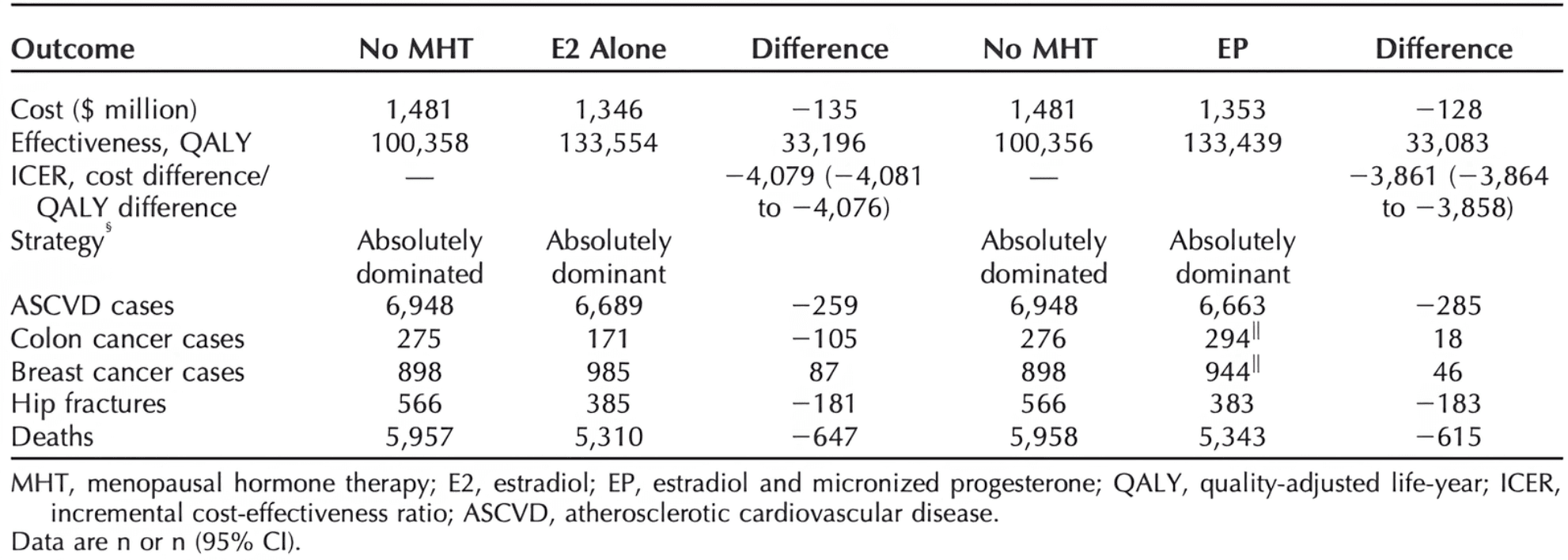
Figure 2: Table directly from the paper summarizing the results of the cost-utility analysis of MHT.
Stress-Testing the Model
These numbers are staggering. Building a population-level health economics model of this magnitude is incredibly difficult, as researchers must assign rigid statistical values to highly nuanced clinical realities. While the biological plausibility is sound, understanding the required assumptions of the simulation helps clinicians better interpret the results:
The ASCVD Assumption (Potentially Overstated): The model relies heavily on the "Timing Hypothesis" (starting MHT within 10 years of menopause), simulating hypothetical 50-year-old women starting MHT for a 5-year duration under the theory that risk profiles change once women enter their 60s. For example, the model extrapolated the massive 48% decreased risk of coronary heart disease with MHT use for 6 months or longer (drawn from a 2015 Cochrane review) to a constant benefit over 5 years of MHT use. Because heart disease is the #1 killer of women, this single metric drove most of the cost savings and effectiveness over no MHT use. While RCTs like ELITE show that early initiation of oral estradiol slows atherosclerosis progression (and KEEPS demonstrated the cardiovascular safety of transdermal E2), assuming a near-50% reduction in hard clinical events likely overstates the benefit for a modern population already managed with lipid-lowering agents and GLP-1s.
The Breast Cancer Discrepancy: The researchers assumed a 4% increase in breast cancer risk with E2 alone, and a 0% change with E2+P4 (derived from a 2022 nested case-control study). The long-term data actually demonstrated that E2 alone actually decreased breast cancer risk. Conversely, while it is true that micronized P4 is much safer than MPA, we do not have sufficient research to definitively claim an absolute zero risk increase for E2 + P4.
The "Invisible" Symptoms (Understated): The QALY calculations were primarily driven by VMS resolution and long-term disease avoidance. The model failed to include the resolution of myriad other menopausal symptoms such as sleep architecture disruption, Genitourinary Syndrome of Menopause (GSM), mood disturbances, and musculoskeletal joint pain. It is likely these symptoms were omitted because it is difficult to discern these symptoms as menopause only vs multifactorial or resulted from general aging processes. However, by omitting these, the model underestimated the true economic and clinical benefits of MHT.
Clinical Takeaway:
This paper provides rigorous data to frame modern MHT not just as a symptom-management tool, but as an extremely cost-effective preventative intervention. When you prescribe transdermal E2 and micronized progesterone to a symptomatic 50-year-old, you aren't just treating her night sweats - you are potentially shifting her cardiometabolic trajectory and saving the healthcare system thousands of dollars. The Guardrail: Despite this promising evidence favoring cardioprotection, MHT is not FDA-approved or guideline-recommended for the primary or secondary prevention of cardiovascular disease, and it should never replace statins or lipid-lowering therapies in patients with established ASCVD.
Conclusion
Whether treating a 35-year-old with POI or a 50-year-old navigating the menopause transition, precision hormone prescribing requires staying up-to-date with evolving guidelines and recognizing the long-term impact of our clinical decisions. We hope this month’s research breakdown gives you more data to help you prescribe with confidence!
And if you are attending either the WHNP conference or the Perry Academy symposium, please reach out or come find us - we’d love to meet you!
Until next month!
Warmly,
The Dama Team